
Bikesure_adrianflux

Internal pressure control valves: Do they actually tame engine braking?

Webike Japan

Registered
Joined
May 14, 2026
Messages
4
Location
Japan
Bike
Other Not a Ducati
Lately, I’ve been noticing a lot of development around internal pressure control valves in the aftermarket scene. Managing crankcase pressure to reduce pumping loss is a pretty popular tuning concept here in Japan, especially for riders trying to smooth out aggressive engine braking on big twins or singles.

The theory makes sense—venting that internal pressure theoretically allows the crank to spin more freely, resulting in smoother deceleration and throttle transitions. But it always sparks a debate. Some riders swear it completely transforms the low-speed handling of their bikes, while others feel it’s unnoticeable outside of a racetrack environment.

Before analyzing the newer valve designs hitting the market, I’d love to hear your take. Have you ever installed a crankcase pressure valve on your current setup? Did you notice a real-world difference in engine smoothness, or is it mostly a placebo effect on the street?


Attachments

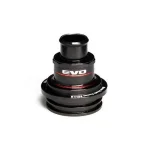
  • AE-62051_TM (1).webp
    AE-62051_TM (1).webp
    9.5 KB · Views: 0
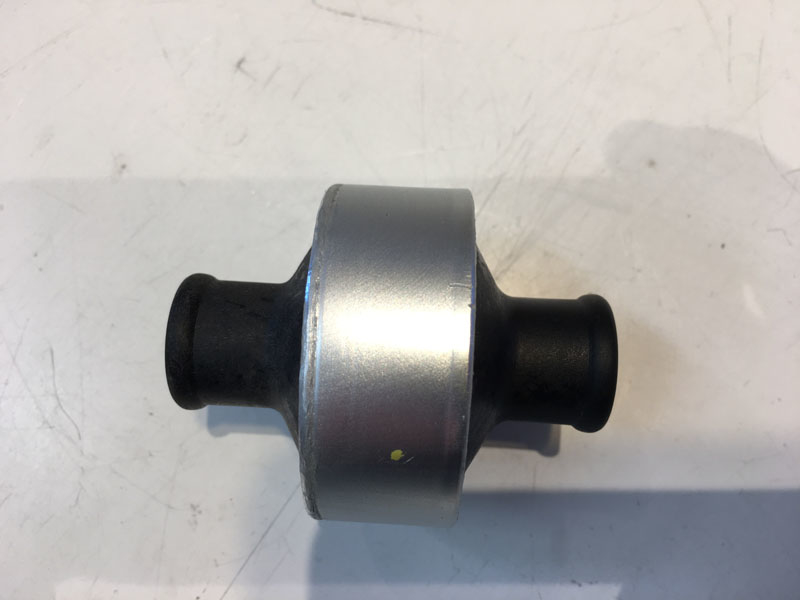
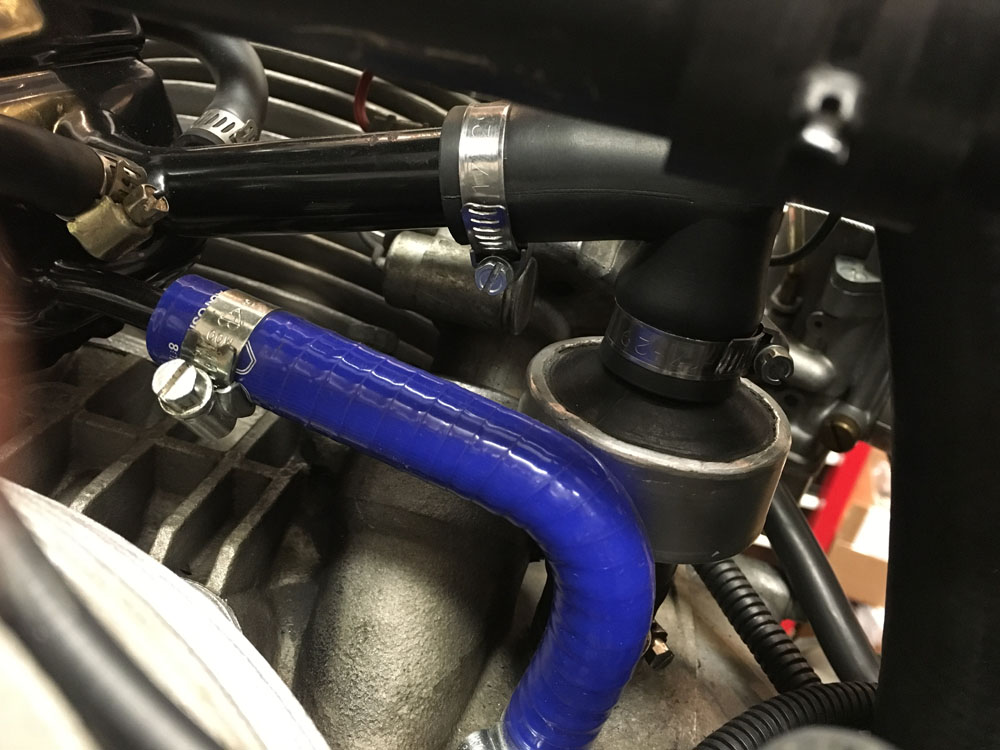
I've always tried to arrange a non return valve on my bike engines to achieve negative crankcase pressure. I am happy with the standard breather on the Monster as it already has a non return valve, so I can't see any advantage in spending over 200 quid on something with EVO written on it?

However if you sell an affordable breather non return valve which will fit inline with a 1/2" tube I'm interested.

There are of course many advantages to having a negative crankcase pressure and "controlling" engine braking isn't one of them.
 
However if you sell an affordable breather non return valve which will fit inline with a 1/2" tube I'm interested.
I wanted such a thing for my Guzzi as the original ball valve is, frankly crap.

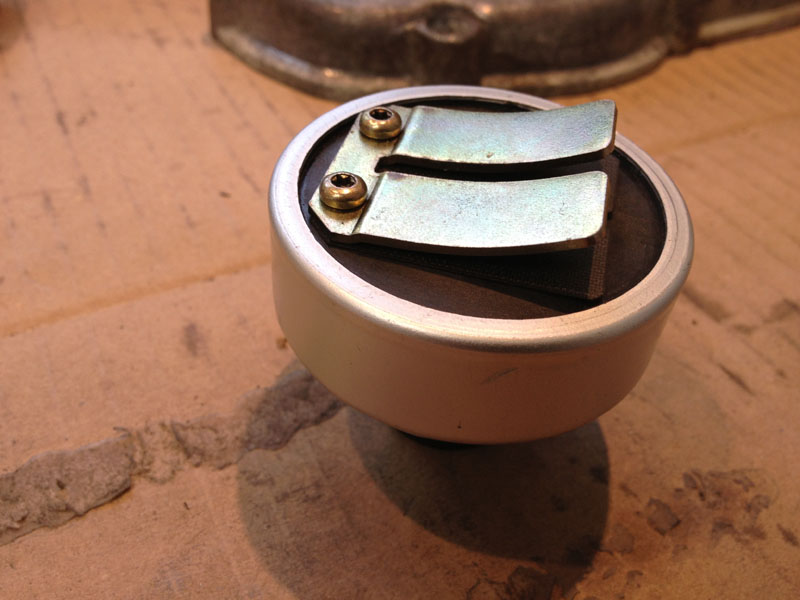
But, to make a short story long, I have a 'Corse' breather valve on my 916 which is a reed valve that sits in the airbox, the purpose of which is to move the valve away from the crank case, giving a greater distance so that less/no oil will pass through and also allowing a larger 'theoretical' crankcase volume, reducing pressure, pumping losses etc. These are used on race bikes to help reduce blowby and give a (small) power increase at high RPM.

Here;
5518-1428146230-b426cc1880d4741f85dfb3ac8f12e444.jpg


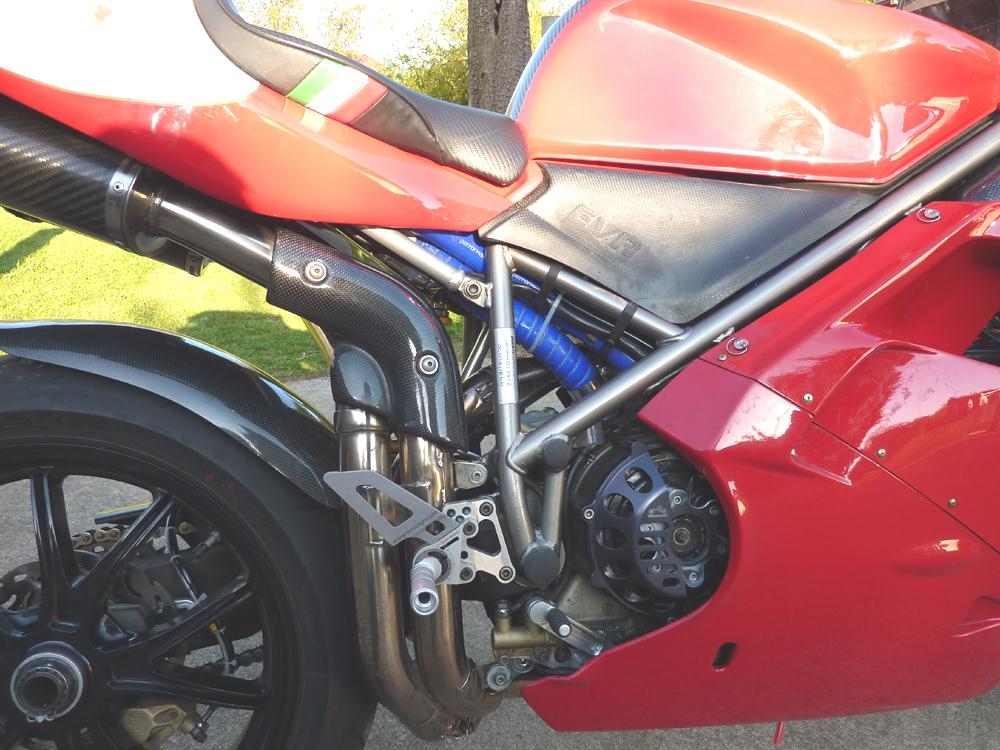
I bought one and here it is fitted in the airbox along with a large-bore straight through valve on the crankcase and large under-seat breather/catch tank;

2670-1393798183-3ac8a9988c5cd999ce49922ee031985e.jpg


Large under-seat 'Corse' breather/catch tank;

13311-1773650837-548339db74c12d84dcb161d39f84db77.jpg


Straight -through, reed-less 'Corse' breather valve;

12538-1701336760-c2af2d4f24e5505363201f10883dae9c.jpg


Then it dawned on me that it is just a variation of the standard breather;

8507-1508251631-be016b25a2275138a811700e095fe287.jpg


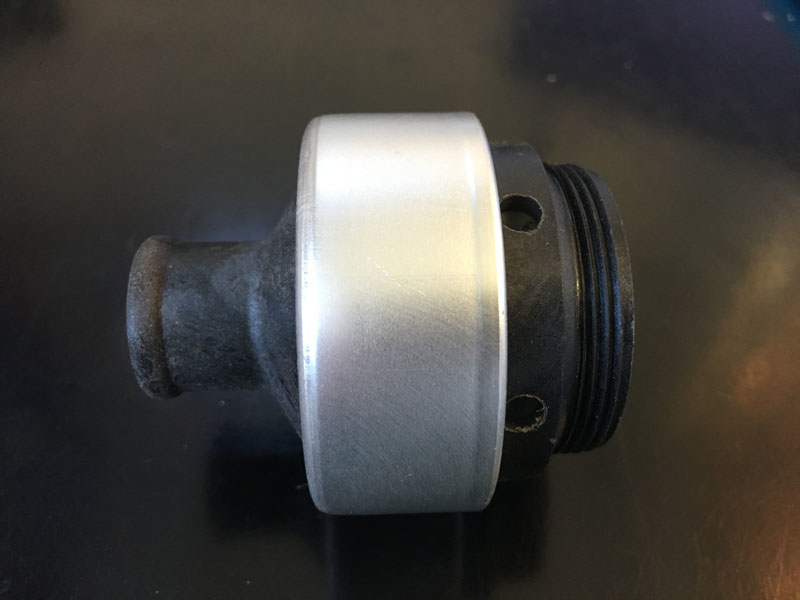
So I took a standard breather, opened it up and re-configured it as a 'Corse' breather as a spare with plans to use it on the Monster but as it has no airbox, it didn't really fit and work as I wanted and I realised I needed an inline version so, I took 2 of the standard breathers, and 'blended them to make an inline breather with the same large reed valve internals;

8702-1513247359-4523fe0e941788ed0b3b23364926076c.jpg


Which is probably the kind of thing you're looking for?

I used this in the Monster for a while but then made a large breather tank and re-purposed a (later, plastic) standard breather for in-line use.

12207-1688292339-f1d1fd7bec0417b909da48883c94db9d.jpg


But the in-line valve was perfect for the Guzzi, which I had fitted with a larger breather/catch tank (you can see a theme here)

6735-1459848921-61e7915256596bb2cd297c531cc796ff.jpg


6824-1461447996-0bcab1ce7cd3061e5ccbd5d8b0e8409f.jpg


Of course Ducati have long discontinued the alloy breathers, replaced with a plastic version, less prone to leakage as per the one I'm now using on the Monster. These are less mod-friendly and the old alloy versions are now difficult to find but, I was buying them at a time when people were removing them because of the tendency to leak and so could generally find them for not much money.

I did search online but nowhere could I find an inline reed-valve breather of suitable size, PCV valves etc. just don't flow the volume of air needed for a big V-twin with uneven firing pulses that create large variations in crankcase pressure so I resorted to DIYing it, and I know that if you can source 2 alloy breathers then, a man of your capabilities could easily make such an inline breather.

I bought that many over the years that I may have exhausted the World's supply though... :rolleyes:
 
Last edited:
Thanks Tim, that's given me some inspiration.
As it happens I have a spare plastic Monster breather which came spare when I fitted an all alloy one. Not like the alloy banded one you have shown, but all alloy throughout.

I like what you've done on your Guzzi. I would have thought something like that up for mine, had I kept it. It was a bit of a casserole under the tank round the breather tank area!

The inline 1/2" breather is for the Triumph. I have one intended for Nortons at the moment, but it reduces from 1/2" to 3/8" on the outlet side, which I'd like to improve on.
I'm doing some mods to the side panels which will give me a bit more room, so I could get the Monster one in there with a bit of cunning.
A reducer to 1/2" on the outlet side seems simple, but the other end will require a bit more thought... I have a very clever nephew who's really good with 3D cad though and he has a 3D printer.. ;)

I think all your installations are super neat and professional. Very good. (y)
 
Last edited:
Thanks Tim, that's given me some inspiration.

Inspiration is always good.

Not sure how you're planning it but, due to having chopped a few up but only using select parts, I have a couple of the 'innards' left over from modifying breathers - the actual plate with the reed valves etc. that could be incorporated into the unit, meaning you'd only need to make the housing.

13423-1793106980-1e7b34c7f9a2cd94e34eb2bc0048246e.jpg


If of any use to you, I'll happily send you one for the project. (y)
 
Wowsa! That would be fantastic Tim, Yes please.

That will shift 750cc an awful lot better than the little valve I have now. There must also be further restriction inside the tiny body of the prv as there must be a ball or flap in there.
I'm thinking it would be cool if I could find a tin that the reed valve assy would fit into, but I think it will be a bespoke canister of some kind?

Marvellous. :p
 
No problem, for the record the plastic 'disc' measures 51mm diameter but could be turned down a little to 50mm on a lathe if that works?

Alternatively I do have a 1m length of 57mm OD aluminium tube with a 53mm ID which I was considering using (would need some packing) for a breather project but then didn't need it.

I don't know if that's any use but I can cut you a piece off if it is?
 
Last edited:
You've done it again and given me more inspiration.
Mentioning the diameter and tube has got me thinking what I've got to hand and I'm thinking plastic waste pipe which can be solvent welded.
There must be a blanking end stop that I can make a canister with, I'm sure there must be something close to 50mm ID too?.. More swatting needed!
Thank you also for the offer of a bit of 53mm ID ally tube which I think I will politely decline as I can't really think how I would be able to fabricate with it. I'm a dab hand with angle and flat though and I just made some adapters from 2mm sheet to sleeve down a baffle for the Triumph's silencers. (The baffles were too much as it happens and they are back on the shelf they spent the last 47 years on!!)
 
I've always tried to arrange a non return valve on my bike engines to achieve negative crankcase pressure. I am happy with the standard breather on the Monster as it already has a non return valve, so I can't see any advantage in spending over 200 quid on something with EVO written on it?

However if you sell an affordable breather non return valve which will fit inline with a 1/2" tube I'm interested.

There are of course many advantages to having a negative crankcase pressure and "controlling" engine braking isn't one of them.
Thanks for the honest feedback! I completely agree on the Monster—its stock setup is already solid, and dropping £200+ on a branded valve is hard to justify for many.

The engine braking aspect always sparks a good debate. The common theory here in Japan is that reducing pumping loss simply removes some parasitic drag on the crank. It doesn't "control" engine braking like a slipper clutch, but that freer rotation is often felt as a smoother deceleration by riders. It's fascinating how different markets interpret the benefits.

I do work in the parts industry, though my goal here was really just to gather street feedback. I’m taking notes on the demand for a simple, affordable 1/2" inline valve. If we bring something like that to market soon, I'll be sure to let you know!
 
Thanks for taking a genuine human interest in my reply.
Whilst trying to avoid engaging in a debate about engine braking, I am already convinced that there are many good reasons to fit an effective PCV.
As you can see from the above conversation, dedicated club members have already colluded to create a solution in the Great British Shed tradition.
I'm sure there will be updates on here as the project progresses.

In the mean time I applaud your interest in producing a nice simple inline PCV as the market seems to be void of such a product. (I have looked almost exhaustively I think!)

I think it's important that any such device would be capable of passing the maximum volume of gas and have the ability to allow any oil condensate in the oleaginous fumes to flow back when the engine is at rest.
So many of the few available seem to be of too small a bore to be truly effective!
Another feature that I think would be desirable would be the facility to fit a range of barbed tails to suit various tube sizes. For instance, say, 3/8" to 1" or more tube sizes and maybe the option for various compression fittings such as the AN range?
So I'm saying a reasonably compact generic valve housing with multiple fitting options, reducers ect,

For instance the one offered for big Norton twins is 1/2" one end and 3/8" the other and obviously the valve is directional so the orientation of those sizes is important.

It would probably be the case that a large version for big car/ boat ect engines and a smaller one for motorcycles and sub, say 1000cc engines might fit the bill? Both being compatible with the same range of fittings of course.

Maybe getting all those ducks in line and making a compact enough product to fit universally is why the market seems to missing it at the moment??

Good luck.. ;)
 
Last edited:
The memory is a little clouded but a good number of years ago I flagged up a thing, can't quite recall the name but it was something like "frixon" .... possibly.
I read about it in MCN and Leon Haslam was testing it on the Airwaves BSB Ducati at the time.
I think that was some sort of crankcase ventilation control device.
I searched for the thread but couldn't find it.

On my Honda Dominator based bike I have removed the external oil separator and the crankcase now vents simply through a vertical tube which rises up to seat height and terminates pointing downwards via a u-bend. That's all there is to it. I'm not aware of any non-return device within the cases, its just simply an exit pipe of about 10mm bore as far as I know.
I used to have a filter on the end of the tube but I found it offered too much resistance. A bizarre consequence of that was a massive increase in condensation (as far as I could figure) within the upper regions of the cases, such that I found an accumulation of water in the chamber which houses the starter motor drive gearing. Removing the filter eliminated that.
I've never noticed any oil residue at the tube end. Not even a misting.


I'm inclined to think that a simple, low resistance system scores more highly than a complex one which chases a relatively small return.
But its interesting.
 
The engine braking aspect always sparks a good debate. The common theory here in Japan is that reducing pumping loss simply removes some parasitic drag on the crank. It doesn't "control" engine braking like a slipper clutch, but that freer rotation is often felt as a smoother deceleration by riders. It's fascinating how different markets interpret the benefits.
I suppose that having no crankcase breathing whatsoever would likely increase engine braking due to the pressure build up in the crankcase.

Would also mean it'd leave an oily mess everywhere you go and have to leave a catch tray under the bike when parked up.

Remember that? :unsure:
 
The reed valve was delivered this morning. Thank you so much Tim. (y)
I measure the disc itself at 46.5mm. The body that contains it is 51mm OD.
The 50mm solvent weld waste pipe blanking ends I bought are too bulky and clumsy, so I'm on the hunt again.
Last resort will be a bespoke carbon fibre housing, which will have the advantage of being able to point the inlet and outlet stubs in a strategic direction.

I notice there's a 1.5mm hole in the centre of the disc. I wonder if this is to drain oil back into the crankcase?
 
I notice there's a 1.5mm hole in the centre of the disc. I wonder if this is to drain oil back into the crankcase?
It is indeed and when fitted in the original position is useful as some oil can pass and you then want it to return but when I use them further up the line where oil won't get to (and if it does it's not going back anyway) then I have plugged said hole by tapping/screwing/loctiting a small screw in it - the belt/braces approach because I didn't want a screw coming loose, falling out and working it's way back into the engine.

The genuine 'Corse' valves as fitted in the airbox of my 916 don't have the return hole. It's also nice that the reeds can be dismantled for cleaning etc.

I'd forgotten that the disc can be removed from the body, gives you a bit more versatility size-wise, a carbon fibre tube would be nice... :unsure:
 
On my Honda Dominator based bike I have removed the external oil separator and the crankcase now vents simply through a vertical tube which rises up to seat height and terminates pointing downwards via a u-bend. That's all there is to it. I'm not aware of any non-return device within the cases, its just simply an exit pipe of about 10mm bore as far as I know.
Proper old school and how they used to do it until emissions regulations etc. were born.

I recall my old Ducati Scrambler had a transparent plastic tube of maybe 15mm diameter, exiting the top of the crankcase and leading up the frame to behind the seat, any vapour/oil would exit there though I don't recall it ever dripping.

Clearly visible in this picture (not mine BTW);

13425-1793440474-5da75f53f8d59395a24405931d87c110.jpg


My old Guzzi whilst it has a catch tank for the crankcase that feeds any blow-by oil back into the sump, has the same open pipe setup for the (separate) gearbox, simply ending down by the centre stand.

Venting to airbox has advantages other than emissions, the negative pressure created by the intakes helps relieve pressure build up (this is more prevalent in certain engine configurations; singles, V-twins etc, as they don't have an 'opposing' cylinder like, for example an inline 4 has, where as one cylinder is going up, another is coming down and so relieves the pressure created by the other) and the reed valve being at the 'end' of the circuit effectively increases the crankcase volume, further reducing pressures by virtue of the same pumping volume in a larger overall volume whilst the large catch tank could effectively catch most or even all of the oil in the event that the engine has a catastrophic pumping event.

Ducati even claimed a couple of HP increase at the top end for the 916 series racing bikes by using the large breather/reed valve in airbox as per my post above - admittedly not a huge gain but nonetheless worthwhile in racing.

When I fitted a home made large breather/catch tank to my Monster it stopped oil vapours/smoke/dripping from the breather exit at the front of the bike which it was always prone to doing - it has no airbox so vents to atmosphere rather than 'recycling' the fumes through the engine.
 
Even though I am very much an environmentalist at heart, I have always thought that the "recycling" of crankcase emissions through the airbox was a misguided and relatively ineffective over-reaction to a negligible problem.
I'm also not particularly convinced by claims that negative pressure in the airbox reduces pumping losses and increases power. It seems to me that if there is any significant negative pressure then the airbox is too restrictive and needs opening up for better breathing.
Certainly, when I removed the crankcase emissions system from the Dommie as well as removing the airbox and fitting a K&N pod filter, the result was a really significant increase in power.

Somewhat confusingly, my (750) monster (which has the std crankcase vent system except that the pipe from the separator tank to the airbox has been removed and a filter fitted to the outlet stub) develops an oil mist around the reed valve unit and the separator tank filter, whereas there is never any sign of oil misting around the plain outlet pipe on the Dommie.
I would have thought that the crankcase pumping effect from the 750 v-twin would be similar to that from the 650 single.

I grew up on 2-strokes where crankcase pumping losses are not an issue, graduating onto 4 cyl engines where its also a minimal phenomenon.
I do remember in those days though, seeing many a Triton or similar parked up on racedays at Mallory having elaborate lengths of tubing from multiple engine breathers feeding their oil mist (or worse) onto the rear chain.

I do realise that none of my comments address the question originally posed regarding engine braking.
However to my mind, this would be a relatively minor aspect of the engine breather issue.
 
I'm also not particularly convinced by claims that negative pressure in the airbox reduces pumping losses and increases power. It seems to me that if there is any significant negative pressure then the airbox is too restrictive and needs opening up for better breathing.

Somewhat confusingly, my (750) monster (which has the std crankcase vent system except that the pipe from the separator tank to the airbox has been removed and a filter fitted to the outlet stub) develops an oil mist around the reed valve unit and the separator tank filter, whereas there is never any sign of oil misting around the plain outlet pipe on the Dommie.
Ducati's claim was that the negative pressure in the airbox, i.e. the vacuum created by the intakes helps reduce pressure in the crankcases by, effectively 'sucking' air out, thus reducing the pressure working against the piston on it's down stroke and so making the power-stroke more effective.

The effect isn't great, IIRC they claim maybe 2hp at peak RPM on a race bike (so around 11 -12,000rpm) but, as always in racing, every little helps.

Similarly, I understand that in some motorsports (Drag racing IIRC) a similar effect is created by routing the crankcase ventilation into the exhaust pipe to use the pressure/suction of the exhaust to help 'evacuate' the gas/pressure build up though I would be concerned about potential fire etc. with this approach. I've even heard of trials with actual suction motors to help reduce crankcase pressures but I don't know if anyone has ever actually produced anything?

As for oil/mist around the reed valve, 'they all do that Sir' one reason they replaced the alloy breathers with the plastic was that they are less leaky (but still usually leak), I have an aftermarket billet alloy version on the Monster (with the reeds removed) which are not supposed to leak and despite using all manner of sealants etc. there still some stainage around it.
 
I don't like breathers that are simply an open tube with no non-return valve or filter.
If the volume of the tube does not exceed the displacement of the engine (the capacity), then there will always be fresh atmospheric air entering the tube and reaching the crankcases on each up stroke of the piston(s). That might be a small cooling effect, but it also means that dirt and grit can be sucked straight into the engine!
Also the engine will be pumping the entire capacity out and in on each revolution which will be more or less efficient depending on the diameter of the breather and how much drag that induces.
An open tube should at least have a filter on it to stop the muck getting into the engine.

Put a non-return valve in the tube and in theory the only way is out, so contamination is virtually eliminated depending on how good the valve is. Also that volume is removed from the crankcases in the first few strokes and the internal pressure remains at, or below below atmospheric pressure while running, there will be very little gas actually moving in the breather tube, certainly in the "out" side of the valve anyway.
So oil should not continue to significantly build up beyond the valve. A little oil is going to make the valve, be it ball or reed, seal much better when closed by the negative crankcase pressure and increase its efficiency.

For me the main benefit of a negative crankcase pressure is the reduction of oil leaks. If the cases are always sucking in, as it were, then the oil will be held inside, at least until you get home and switch off so that it can drip onto your workshop floor..

The lack of resistance to the descending piston(s) would seem to me to be negated by the increase going up against the "vacuum", so I don't get the whole thing about "pumping losses" and how it has anything to do with engine braking?
I'm sure trying to get into the science of that would do my head in.

One thing that does bother me a little about a negative crankcase pressure is the possible increased likelihood of blow-by of combustion gasses past the rings and exhaust valve guides? I guess that would only be a problem in a worn engine where it was already the case anyway?

I'm also slightly bothered by talk of putting the non-return valve at the far end of the breather tube to increase the volume of the crankcases. That doesn't make sense to me if all, as most of the engines displacement is removed in the first few strokes. Surely after that, all that's happening is that the flexible tube leading to the valve is just, er, flexing in and out with the pressure variation? Maybe that's a good thing?

Having thought about this, I think that the ultimate system would probably be a very large bore and low airflow resistance breather opening (or multiple ones) connected to a plenum vessel with a capacity equal too or exceeding the engines displacement with adequate high flow air filters.
That would have the effect of maintaining a fairly even crankcase pressure of about 1 atmosphere and be the best of all worlds.. Sadly probably turn out to be a tad bulky?
 
Last edited:
Back
Top